Showing posts with label Kerela. Show all posts

Friday, February 17, 2012

Munnar takes the Tea

The last leg of my Kerela travel ended with a heady entry into the greenest tea plantations I've ever seen anywhere in the world -Munnar. You know you are in Munnar when the whirling roads stop becoming a migraine and the views get so fantastic that they convince you that nothing in the world can be devoid of life!
The road at Munnar

After settling for a day, I knew for sure that I had to visit a Tea Estate. What's the point of visiting Munnar and not knowing their tea! I assumed it to be a very touristy affair, but nonetheless I was curious. After talking to a few local people, I settled for a visit to the Kolukkumalai Tea Estate. Visiting it came with some essentials though - a strong jeep to sustain the terribly bumpy road and a happy, informative and patient driver. I think I got it all because the visit was fantastic. A word of caution though, the ride is very uncomfortable and can leave you with an aching body so go for it only if you think you can handle it!

Kolukkumalai Tea Estate Info
The jeep ride to Kolukkumalai Tea Estate
Tea Plantations 
Some of the must do on the way to the tea estate -

  • Stop by the plantation workers, borrow their gear and learn the art of leaf plucking. Their daily wages are very low (less than $1) and will be happy if you tip them for teaching you.
  • Get out of the jeep and walk though the tea plantations or on the road. The plantations are on a slope so walking through them can be risky sometimes.
  • Stop by the point from where you can see the mountain ranges separating Kerela from Tamil Nadu. It is a beautiful sight.
  • Drink the tea prepared by locals at the estate. You will be convinced to buy some after trying it.
  • Just stay calm and enjoy and beautiful views of the tea plantations. The green color is very calming and you will often see them freckled with sparkling butterflies.


The road is not as good as it looks!

Interacting with the tea plantation workers
Kerela and Tamil Nadu seen from the Kolukkumalai Peak
Drinking tea at the Kolukkumalai Tea Estate
The Kolukkumalai Tea Estate is one of the highest tea estates of the world. It is a long drive away from Munnar (over an hour) and actually falls in the Tamil Nadu region. The tea manufacturing process in Kolukkumalai is still done using the orthodox method. It is interesting to to see the green leaves go through different processes to turn into an aromatic black tea favored by people the world over.
Kolukkumalai Tea Factory
Withering Process of Tea Leaves
Fiber Extraction Process
Munnar has many other commercial places of visit such as the Anayirankal Dam and the Eravikulam National Park. I did not visit them. However while walking around the place I was staying, I did see a co-existence of orange and tea plantations which are great to walk through. I remember passing through these fenced orange tree areas and did something that I had always wanted to do. Yes, I entered a private property, jumped until I could grab a tree branch and plucked an orange off it. Some things we never enjoy living in cities!  

Oranges for sale
Munnar also has private estates where they grow spices in their own gardens. Kerela is known for it's spices and therefore it is recommended to visit these spice gardens because you learn a lot about how the spices grow. You can also purchase high quality spices at very reasonable rates from the same gardens.  Some of the spices you can purchase include cloves, pepper, cardamom and cinnamon all which go into daily Indian cooking.

The Spice Garden

The Spice Garden
Coffee beans

Pepper

Thursday, February 2, 2012

Experience the rustic Kumarakom Life!

If you want to spend a few days away from everything urban, Kumarakom is the place to be! A very popular destination in Kerala with not much crowd around.

Kumarakom Map
Kumarakom is like a serene village where time stands still! It doesn't have the rich history and monumental buzz of Cochin. Nor does it have the soaring altitudes and lush green tea estates of Munnar. What it has is, abundance of nature, open spaces and quietness that lets you laze around lapping up the calm backwater views.
Vembanad Lake in Kumarakom
There are several well known hotels and resorts spread across Kumarakom but the one we chose was the KTDC WaterScapes Resort which is located right inside the Kumarakom Bird Sanctuary. It is a simple resort built to be extremely eco-friendly offering fantastic views of the Vembanad Lake. It is also one of the only resorts in all of Kumarakom that has independent huts for accommodation build on top of stilts with water canals passing through them. The resort has no internet connectivity in rooms which makes life even more simpler.
Entrance to KTDC WaterScapes
The WaterScapes huts with canals
The best way to spend a day at Kumarakom is spot a free boat and paddle around in the maze of canals within the resort property, get on to the hammock under your hut and read as much as you like, take a dip in the resort pool, book yourself a therapeutic Kerela spa treatment, and when you are done with all that, just step out of the resort and walk around the quiet bird sanctuary!

The best time to walk around the sanctuary is early morning. The forest is quiet and the uneven path is like an adventurous trail expedition. It may feel a little too quiet at times, but the sanctuary is well managed by the resort and therefore safe. At the end of the sanctuary trail, you may spot a local fisherman with a canoe. It is safe to hire a canoe ride with him because he will take you around the Vembanad Lake showing you different bird varieties and help you in understanding the ecological significance of the area.

Early morning at the Kumarakom Bird Sanctuary
The resort has a single restaurant that offers some of the fine dishes of Kerela. However, I was in favor of sampling home styled food. So I headed out away from the resort to a small shack outside the village. At the shack I ordered a vegetarian thali which was actually a smaller version of the traditional Sadya (an elaborate vegetarian meal eaten during festivals and important occasions in Kerela).

South Indians are known to have a staple diet consisting of rice and that is what dominated on the thali. The other dishes included rasam, thoran, avial, buttermilk, pickles and papad. The Indian bread (also known as Roti) was conspicuous by it's absence. The meal was very delicious and what made it better was the personal attention by the owner since we were the only guests there.

Kerela Thali
Every city in Kerela has something unique to offer and Kumarakom is no different. Leaving Kumarakom after a two days stay was fine because there is very little to do there, but a longer visit with the intention of just doing nothing can also be fantastic.

Early morning canoe ride
Some interesting facts about Kumarakom -
  • Kumarakom got a global appeal after Arundhati Roy's book "The God of Small Things" mentioned a bordering village in the same Kottayam district as Kumarakom. 
  • November to February is the best time to see the migratory birds at the Kumarakom Bird Sanctuary especially the Siberian cranes. The other popular birds are the egrets, kingfisher, water ducks, herons and more. 
  • Karimeen is a popular fish and a delicacy. This fish is especially found in the backwaters of Kerela and should be tried if you enjoy seafood.  
  • Fill your self up with a lot of coconut water. Not only is it healthy but also available in abundance.
If you have read this article and have also visited Kumarakom, please share your experience because I'd love to hear!


Thursday, December 22, 2011

Munroe Island and the Kerela Fish Curry


My journey to Kerela is difficult to describe in words. It was one of those travels which can only be experienced not written about. And the calmness you feel living there is almost close to nirvana.

My journey started in a small town called Ashtamudi. Ashtamudi means "Eight Coned", and is called so because the Ashtamudi's lake topography consists of multiple branches.

Ashtamudi Map
During my stay in Ashtamudi, we made it a point to visit the Munroe Island. Munroe Island is a cluster of 8 tiny islands surrounded by the Kallada River and the Ashtamudi Lake. There are daily village tours that take you around the narrow backwaters in a small canoe allowing you to experience the village life at close quarters. Fishing, coir making, boat making, vegetable growing and goat herding are some of the experiences you get at the village.
Women haggling with local fish vendors
The highlights included small children running out of their houses asking you to gift them pens. Apparently, the children use chalk for writing in schools, so pens are a novelty item which they get only from tourists. Another experience is being a witness to serious haggling of village women with their own local fish vendors. We also manged to get ourselves invited to a village home and learn about their living, specifically their traditional kitchens and open bathrooms.
Coir making process
The best part of the trip was this soft sacred hymn from the island temple interspersed with the light sounds of the water hitting the shores that echoed throughout the island. It gave an very good feel to the village visit which can never be forgotten.


My visit to Ashtamudi cannot be complete without the mention of food.

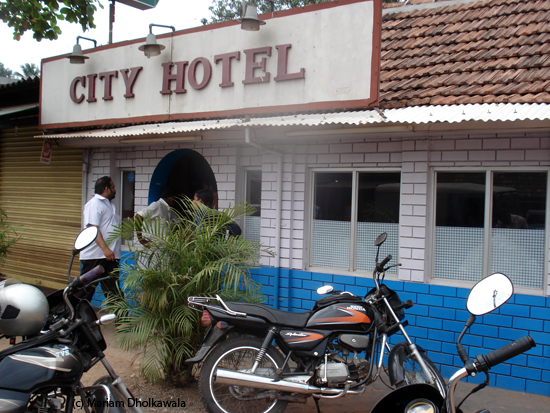
After spending half a day at Munroe island, we asked our driver to take us to any local place for a traditional Kerela fish curry meal. He was hesitant at first and suggested we go back to the resort for lunch, but after insisting, he took us to a small local food joint for the traditional meal. The restaurant was called City Hotel and was very simple and non fussy. Most of the customers eating there were the villagers, so we felt like outsiders with our western clothes. The restaurant had long granite tables with chairs lined up, and most customers sharing tables with strangers. We sat down on an empty table and ordered our Kerela fish curry with fried fish.


The waiters first set the banana leaf as a base for the rest of the food. The next was two types of achars (pickles), followed by dollops of white boiled rice, a vegetable curry and crispy papads (papadums). The spicy fish curry and the fried fish were served separately in bowls.

As they say, when in Rome do what the Romans do, and that's how we ate our meals. We used our hand to mix the rice with the curries and the taste was fantastic. The spoons were set aside and never used.
The food quantity and quality was very good. The rice and the vegetarian gravy were unlimited but ordering more fish came at a cost. The fried fish (not sure about the variety used) was perfectly cooked with simple flavors, but the curry was a little hot for my palate.

Kerela Fish Curry with Fried fish, Rice, Vegetable Gravy, Pickles and Papads

I was not expecting the presenatation of food to be fancy, but was happy to know the cleanliness standards they maintained while serving food. And they probably paid more attention to us since we guests from outside the city.

So on a concluding note, I would say "when in Ashtamudi, sink into the local flavours, both with travelling and with food!" I'll write more about my next Kerela adventure in the following post.