Friday, February 17, 2012

Munnar takes the Tea

The last leg of my Kerela travel ended with a heady entry into the greenest tea plantations I've ever seen anywhere in the world -Munnar. You know you are in Munnar when the whirling roads stop becoming a migraine and the views get so fantastic that they convince you that nothing in the world can be devoid of life!
The road at Munnar

After settling for a day, I knew for sure that I had to visit a Tea Estate. What's the point of visiting Munnar and not knowing their tea! I assumed it to be a very touristy affair, but nonetheless I was curious. After talking to a few local people, I settled for a visit to the Kolukkumalai Tea Estate. Visiting it came with some essentials though - a strong jeep to sustain the terribly bumpy road and a happy, informative and patient driver. I think I got it all because the visit was fantastic. A word of caution though, the ride is very uncomfortable and can leave you with an aching body so go for it only if you think you can handle it!

Kolukkumalai Tea Estate Info
The jeep ride to Kolukkumalai Tea Estate
Tea Plantations 
Some of the must do on the way to the tea estate -

  • Stop by the plantation workers, borrow their gear and learn the art of leaf plucking. Their daily wages are very low (less than $1) and will be happy if you tip them for teaching you.
  • Get out of the jeep and walk though the tea plantations or on the road. The plantations are on a slope so walking through them can be risky sometimes.
  • Stop by the point from where you can see the mountain ranges separating Kerela from Tamil Nadu. It is a beautiful sight.
  • Drink the tea prepared by locals at the estate. You will be convinced to buy some after trying it.
  • Just stay calm and enjoy and beautiful views of the tea plantations. The green color is very calming and you will often see them freckled with sparkling butterflies.


The road is not as good as it looks!

Interacting with the tea plantation workers
Kerela and Tamil Nadu seen from the Kolukkumalai Peak
Drinking tea at the Kolukkumalai Tea Estate
The Kolukkumalai Tea Estate is one of the highest tea estates of the world. It is a long drive away from Munnar (over an hour) and actually falls in the Tamil Nadu region. The tea manufacturing process in Kolukkumalai is still done using the orthodox method. It is interesting to to see the green leaves go through different processes to turn into an aromatic black tea favored by people the world over.
Kolukkumalai Tea Factory
Withering Process of Tea Leaves
Fiber Extraction Process
Munnar has many other commercial places of visit such as the Anayirankal Dam and the Eravikulam National Park. I did not visit them. However while walking around the place I was staying, I did see a co-existence of orange and tea plantations which are great to walk through. I remember passing through these fenced orange tree areas and did something that I had always wanted to do. Yes, I entered a private property, jumped until I could grab a tree branch and plucked an orange off it. Some things we never enjoy living in cities!  

Oranges for sale
Munnar also has private estates where they grow spices in their own gardens. Kerela is known for it's spices and therefore it is recommended to visit these spice gardens because you learn a lot about how the spices grow. You can also purchase high quality spices at very reasonable rates from the same gardens.  Some of the spices you can purchase include cloves, pepper, cardamom and cinnamon all which go into daily Indian cooking.

The Spice Garden

The Spice Garden
Coffee beans

Pepper

Thursday, February 2, 2012

Experience the rustic Kumarakom Life!

If you want to spend a few days away from everything urban, Kumarakom is the place to be! A very popular destination in Kerala with not much crowd around.

Kumarakom Map
Kumarakom is like a serene village where time stands still! It doesn't have the rich history and monumental buzz of Cochin. Nor does it have the soaring altitudes and lush green tea estates of Munnar. What it has is, abundance of nature, open spaces and quietness that lets you laze around lapping up the calm backwater views.
Vembanad Lake in Kumarakom
There are several well known hotels and resorts spread across Kumarakom but the one we chose was the KTDC WaterScapes Resort which is located right inside the Kumarakom Bird Sanctuary. It is a simple resort built to be extremely eco-friendly offering fantastic views of the Vembanad Lake. It is also one of the only resorts in all of Kumarakom that has independent huts for accommodation build on top of stilts with water canals passing through them. The resort has no internet connectivity in rooms which makes life even more simpler.
Entrance to KTDC WaterScapes
The WaterScapes huts with canals
The best way to spend a day at Kumarakom is spot a free boat and paddle around in the maze of canals within the resort property, get on to the hammock under your hut and read as much as you like, take a dip in the resort pool, book yourself a therapeutic Kerela spa treatment, and when you are done with all that, just step out of the resort and walk around the quiet bird sanctuary!

The best time to walk around the sanctuary is early morning. The forest is quiet and the uneven path is like an adventurous trail expedition. It may feel a little too quiet at times, but the sanctuary is well managed by the resort and therefore safe. At the end of the sanctuary trail, you may spot a local fisherman with a canoe. It is safe to hire a canoe ride with him because he will take you around the Vembanad Lake showing you different bird varieties and help you in understanding the ecological significance of the area.

Early morning at the Kumarakom Bird Sanctuary
The resort has a single restaurant that offers some of the fine dishes of Kerela. However, I was in favor of sampling home styled food. So I headed out away from the resort to a small shack outside the village. At the shack I ordered a vegetarian thali which was actually a smaller version of the traditional Sadya (an elaborate vegetarian meal eaten during festivals and important occasions in Kerela).

South Indians are known to have a staple diet consisting of rice and that is what dominated on the thali. The other dishes included rasam, thoran, avial, buttermilk, pickles and papad. The Indian bread (also known as Roti) was conspicuous by it's absence. The meal was very delicious and what made it better was the personal attention by the owner since we were the only guests there.

Kerela Thali
Every city in Kerela has something unique to offer and Kumarakom is no different. Leaving Kumarakom after a two days stay was fine because there is very little to do there, but a longer visit with the intention of just doing nothing can also be fantastic.

Early morning canoe ride
Some interesting facts about Kumarakom -
  • Kumarakom got a global appeal after Arundhati Roy's book "The God of Small Things" mentioned a bordering village in the same Kottayam district as Kumarakom. 
  • November to February is the best time to see the migratory birds at the Kumarakom Bird Sanctuary especially the Siberian cranes. The other popular birds are the egrets, kingfisher, water ducks, herons and more. 
  • Karimeen is a popular fish and a delicacy. This fish is especially found in the backwaters of Kerela and should be tried if you enjoy seafood.  
  • Fill your self up with a lot of coconut water. Not only is it healthy but also available in abundance.
If you have read this article and have also visited Kumarakom, please share your experience because I'd love to hear!


Thursday, December 22, 2011

Munroe Island and the Kerela Fish Curry


My journey to Kerela is difficult to describe in words. It was one of those travels which can only be experienced not written about. And the calmness you feel living there is almost close to nirvana.

My journey started in a small town called Ashtamudi. Ashtamudi means "Eight Coned", and is called so because the Ashtamudi's lake topography consists of multiple branches.

Ashtamudi Map
During my stay in Ashtamudi, we made it a point to visit the Munroe Island. Munroe Island is a cluster of 8 tiny islands surrounded by the Kallada River and the Ashtamudi Lake. There are daily village tours that take you around the narrow backwaters in a small canoe allowing you to experience the village life at close quarters. Fishing, coir making, boat making, vegetable growing and goat herding are some of the experiences you get at the village.
Women haggling with local fish vendors
The highlights included small children running out of their houses asking you to gift them pens. Apparently, the children use chalk for writing in schools, so pens are a novelty item which they get only from tourists. Another experience is being a witness to serious haggling of village women with their own local fish vendors. We also manged to get ourselves invited to a village home and learn about their living, specifically their traditional kitchens and open bathrooms.
Coir making process
The best part of the trip was this soft sacred hymn from the island temple interspersed with the light sounds of the water hitting the shores that echoed throughout the island. It gave an very good feel to the village visit which can never be forgotten.


My visit to Ashtamudi cannot be complete without the mention of food.

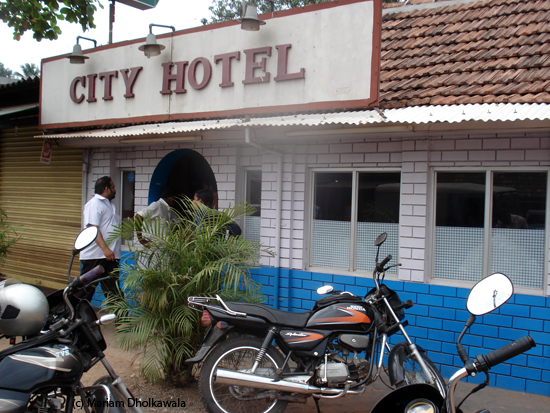
After spending half a day at Munroe island, we asked our driver to take us to any local place for a traditional Kerela fish curry meal. He was hesitant at first and suggested we go back to the resort for lunch, but after insisting, he took us to a small local food joint for the traditional meal. The restaurant was called City Hotel and was very simple and non fussy. Most of the customers eating there were the villagers, so we felt like outsiders with our western clothes. The restaurant had long granite tables with chairs lined up, and most customers sharing tables with strangers. We sat down on an empty table and ordered our Kerela fish curry with fried fish.


The waiters first set the banana leaf as a base for the rest of the food. The next was two types of achars (pickles), followed by dollops of white boiled rice, a vegetable curry and crispy papads (papadums). The spicy fish curry and the fried fish were served separately in bowls.

As they say, when in Rome do what the Romans do, and that's how we ate our meals. We used our hand to mix the rice with the curries and the taste was fantastic. The spoons were set aside and never used.
The food quantity and quality was very good. The rice and the vegetarian gravy were unlimited but ordering more fish came at a cost. The fried fish (not sure about the variety used) was perfectly cooked with simple flavors, but the curry was a little hot for my palate.

Kerela Fish Curry with Fried fish, Rice, Vegetable Gravy, Pickles and Papads

I was not expecting the presenatation of food to be fancy, but was happy to know the cleanliness standards they maintained while serving food. And they probably paid more attention to us since we guests from outside the city.

So on a concluding note, I would say "when in Ashtamudi, sink into the local flavours, both with travelling and with food!" I'll write more about my next Kerela adventure in the following post.

Wednesday, December 7, 2011

Traditional Bohra New Year Celebration with Food

The Dawoodi Bohra community brings in the New Year in a unique way. The night of the New Year is celebrated with lots of traditional Bohra home cooked food with high importance given to an elaborate, sumptuous dining experience. Something to look forward to every year.

Most families start planning for the New Year dinner some days in advance. The reasons are two -
1. To cook as many dishes as possible; generally anything above 11 and sometimes even upto 52
2. To cook and share their food with neighbors and family.

Most traditional Bohra families eat their meals sitting together around a huge steel plate, also known as "thaal".The thaal is necessary to facilitate a New Year dinner, and the food dishes if high in number, will be seen piled up.

Thaals accommodate atleast 8 people, and those sitting around the thaal eat the food served to them from a single plate put in the center of the thaal. This is very unique experience and was introduced by the ancestors to build brotherhood and closeness amongst those eating together.

This tradition however, is slowing losing ground in modern families, but still encouraged during community meals, festivals or celebrations such as marriages.

A New Year Thaal
The thaal feast does not begin until everyone is seated. This tradition is then followed by offering of salt to everyone in the thaal. Eating a pinch of salt is supposed to stimulate the tastebuds, and set the pace for the rest of the meal. Salt is followed by a small saucer of "sodanna" which is dish consisting of steamed white rice, a little warm pure ghee, some sugar or sweet mava. Sodanna is supposed to signify a happy moment and is auspitious to have in a thaal.

After the preliminaries, any sweet dish can be introduced. A sweet dish is also called "mithaas" by the Bohras. A sweet dish is always followed by a savoury dish, also called "kharas". The process of eating a sweet dish....followed by a savoury dish....continues till all food is finished.

Fruits form an important part of the New Year Thaal. They are light to eat and add to the dish count.

There are some customary dishes that always finds it's way on a New Year thaal.

The first is a sweet dish called "lachka". Lachka is similar to halwa. Crushed boiled wheat, ghee, jaggery and sugar are cooked till blended and soft and then mixed with dry fruits such as almonds and pistachio, finally topped with charoli and dessicated coconut.

Another must item on the thaal is fried fish. The fish is marinated with ginger garlic paste, red chiili powder, turmeric powder, coriander powder, cumin powder and lime.

The raw fish cannot be purchased from the market, but only from specific fishermen who have chanted a prayer at the time of getting the fish out of the bait. Also the fish needs to be a lake bred fish and not a sea fish.

The Dawoodi Bohra community give immense significance to food and love celebrating every moment of their life with tasty and innovative dishes. For those who haven't, should try getting their hands into a Bohri meal for an unforgettable experience!

Sunday, December 4, 2011

Food For Thought, Cafe and a Book


Cafes and bookstores have always been synonymous with each other. The thought of picking up a book and sitting down reading it with a cup of coffee or a sandwich is a tranquilizing thought for a sunny afternoon.

So when I read about this new cafe at Kitab Khana at Fort (opposite HSBC Bank), I jumped at the idea of spending an afternoon there. The cafe called "Food For Thought" sounded unique in its name and their much talked about "Pear and Walnut" cake pulled me sooner to it over a weekend.

I walked into the cafe on a Saturday afternoon and found it to be a packed house. The cafe is very small occupying the furthermost end of the library, but easy to spot. Once I got there, I had to locate the owner Kapil Sanghi (not difficult because he is always around) and tell him I wanted a table for two. After a wait of under 5 mins I had a table ready for me to begin my cafe experience.


Food For Thought serves only vegetarian food but this should not be a deterrent for the non vegetarians because their fixed menu and changing menu is excellent. There were many options to choose from, and we began our order with the Moroccan Pita Salad. The salad was light with a mix of fresh lettuce, cherry tomatoes, olives and a mix of other greens with a yogurt base. The salad got interesting with it's light crispy pita and chick peas.

The next order was the popular Bhel Puri Sandwich. The thought of mixing a Mumbai street chaat with a sandwich was interesting. And when it made it to our table, it was perfectly grilled with the yummy chaat not as soggy as I thought it would be.

Finally it was the time for dessert, something which I look forward to everytime I eat out. As the variety was wide, I decided to ask the owner Kapil for help. Kapil was keen to know the flavors I liked in desserts before helping me choose one. When I told him I wanted my dessert to not be very sweet, but still be a mix of chocolate and sour strawberries, so he vouched that the Chocolate Strawberry Pizza would not disappoint me. And he was right!


The chocolate cake base of the pizza was light and not very sweet and the sourness and the pulpiness of the strawberries balanced it very well. The light whipped cream on top was a perfect replacement for cheese. To cut it short, I choose not to share my dessert with the person I was lunching with :)

The only disappointment were the Oreo Cookie Cupcakes. The icing was too sugary and OK to taste. Kapil did warn us though that his wife makes the best chocolate cupcakes and she wasn't in the kitchen that day. We should have taken the hint :)

Verdict:
Will I go there again? Yes I will!
I loved their food and their menu! Another Saturday afternoon maybe, with a book and some Food For Thought!

Thursday, November 24, 2011

Po Lin Monastery awakens the Palate


My trip to Hong Kong was not intended to be spiritual. It was one of those trips I did during my early travel days while I was till getting a hang of managing myself alone in a new city while working.

I had seven days to spend in Hong Kong, out of which I decided to spend a day at the Lantau island; extremely popular for its Po Lin Monastery and Giant Buddha seated on top of a plateau. Visitors climb a long flight of steps (268 steps says a Wikipedia source) to reach the Giant Buddha; a task not for the faint hearted.

After building an appetite by climbing up and down those stairs, I decided to try the vegetarian restaurant at the monastery. I chose to buy the deluxe meal ticket. The restaurant also had an option of a regular meal which was lesser in cost, and the food served on communal tables in a different room.

In the room serving the deluxe meal, I had a table of my own, so after glancing around the room, I settled in waiting for the food to arrive. After a short while, in came a huge pot of dark and clear liquid with an accompanied smaller empty bowl.

The display confused me and I scanned around the other tables looking for help on how to start my meal. I was lucky to locate a Chinese family on the table adjacent to me. They guided me through their hand gestures to pour the drink from the pot to my smaller bowl and then lift the smaller bowl to the mouth to drink directly from it. This drink was interesting which I later identified as "the Chinese tea".

The happiness of discovering a new drink didn't last long because I was then served a big bowl of soup to finish by myself. The soup was clear with a mild flavour. I don't quite remember the flavour at the moment, but I think it was ok. I also realised that I would not get served any other food till I completed the soup ( a task unattainable by me alone), so I requested them to bring in the rest of the food while I sipped on my soup.

Within minutes I had an array of food laid out in front of me. A sweet corn, green peas and tofu dish, steamed rice, some really light and crispy spring rolls, a dish with shiitake mushrooms and chinese cabbage, and another stir fried vegetarian dish with tofu.


The ingredients in the food were new for me then. I really liked the spring rolls and the combination of rice and sweet corn, but not much of the rest. This probably had to do with my limited knowledge about the flavours and vegetables used for the other dishes.

I'm sure that if I were to have the same meal again today, I would appreciate it better now because these ingredients have grown on me over the years after trying them at various other restaurants.

The afternoon spent at the restaurant at the Po Lin Monastery was great cultural experience. Much of the food was new for my palate but it awakened a new dimension within me to always keep trying new cuisines wherever I go!

Monday, November 21, 2011

A Start to a Beginning!

I’ve had some of the most incredible experiences with food in the city I live in – Mumbai. I’ve had equally great experiences in the places I have traveled to outside Mumbai. I sometimes feel that my purpose of travel is simply to indulge in the amazing food culture the new cities offer me.
Through my blog, I hope to talk about some of these gratifiers that I have encountered through my journeys. It will be an exciting new change for me to write about things I am passionate about. I know my opinions may not be completely identifiable by those reading the articles, so please take it with a pinch of salt. I’ll also add that my articles will not be promoting or discouraging any particular brand, so please don’t associate it with advertising or back-lashing.
And lastly I’ll only provide food for thought to let you decide whether you want to go on this gastronomical journey!
Cheers!!!